
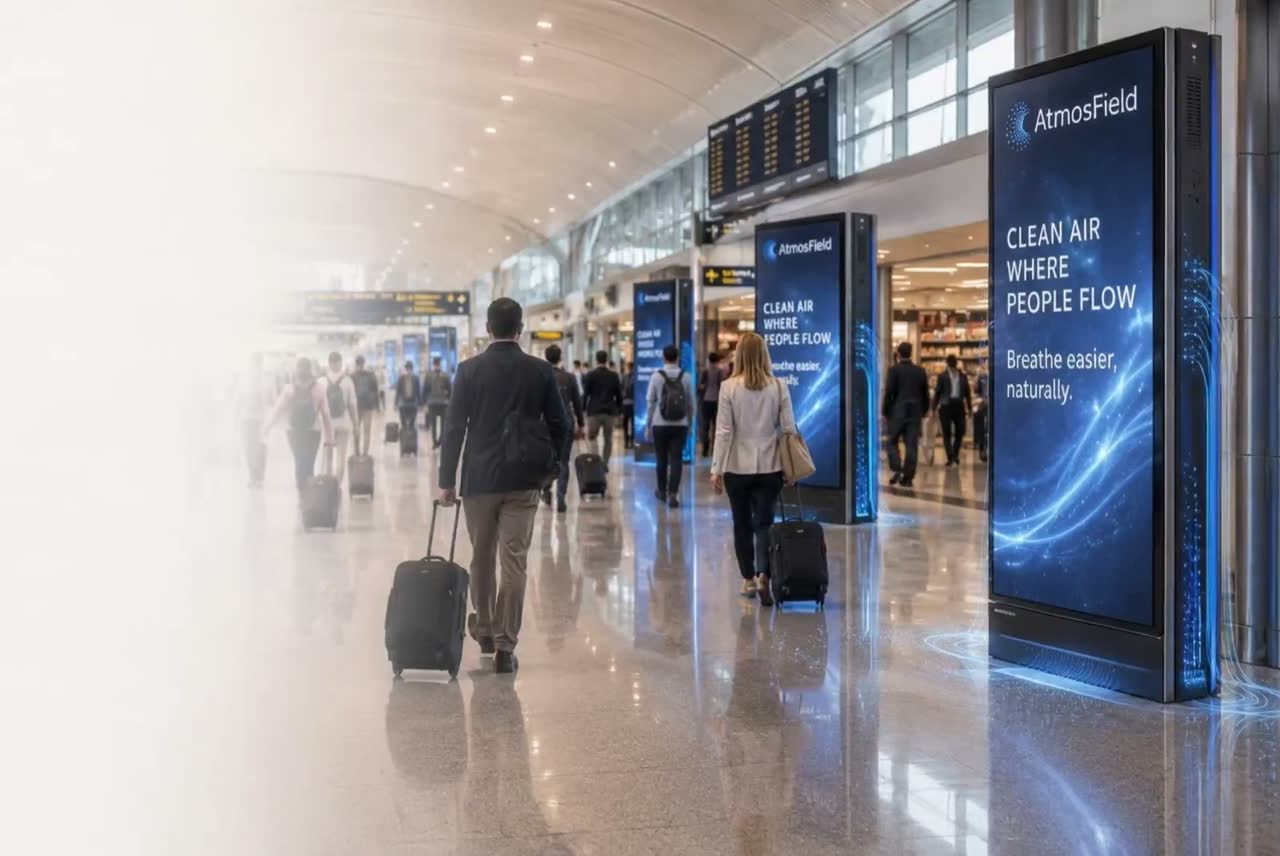
Use what we already have.
PASSAIR explores how screens, acoustic treatments, wall systems and architectural surfaces can become part of the clean air infrastructure.
What if an advertising screen could also help clean the air?
What if an acoustic panel could do the same?
What if environmental function became part of the building itself?
Why add another device when the infrastructure is already there?
One object. More than one function.
Indoor environments already contain enormous amounts of infrastructure and surface area.
Displays communicate. Acoustic treatments manage sound. Wall systems create architecture.
PASSAIR explores whether these same elements can also interact usefully with airflow and particulate.
Clean air infrastructure without another appliance.
An additional environmental layer integrated into the building. Not a replacement for ventilation, HVAC or filtration.
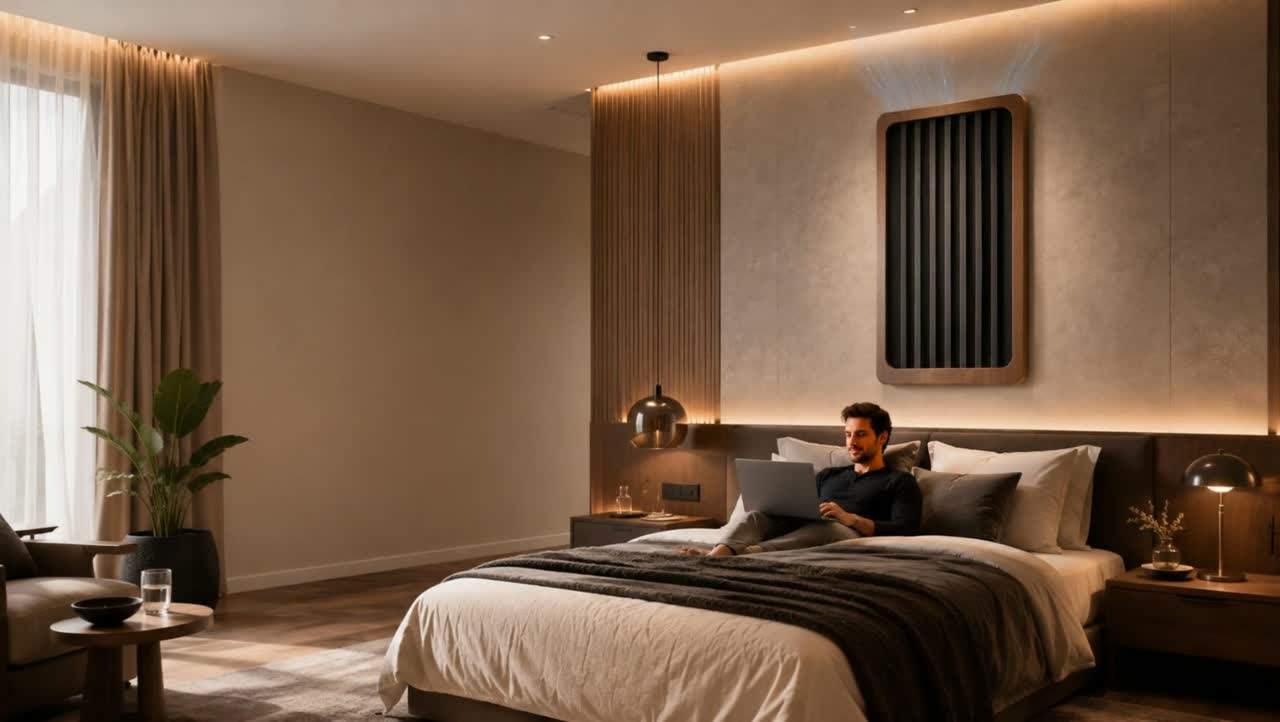
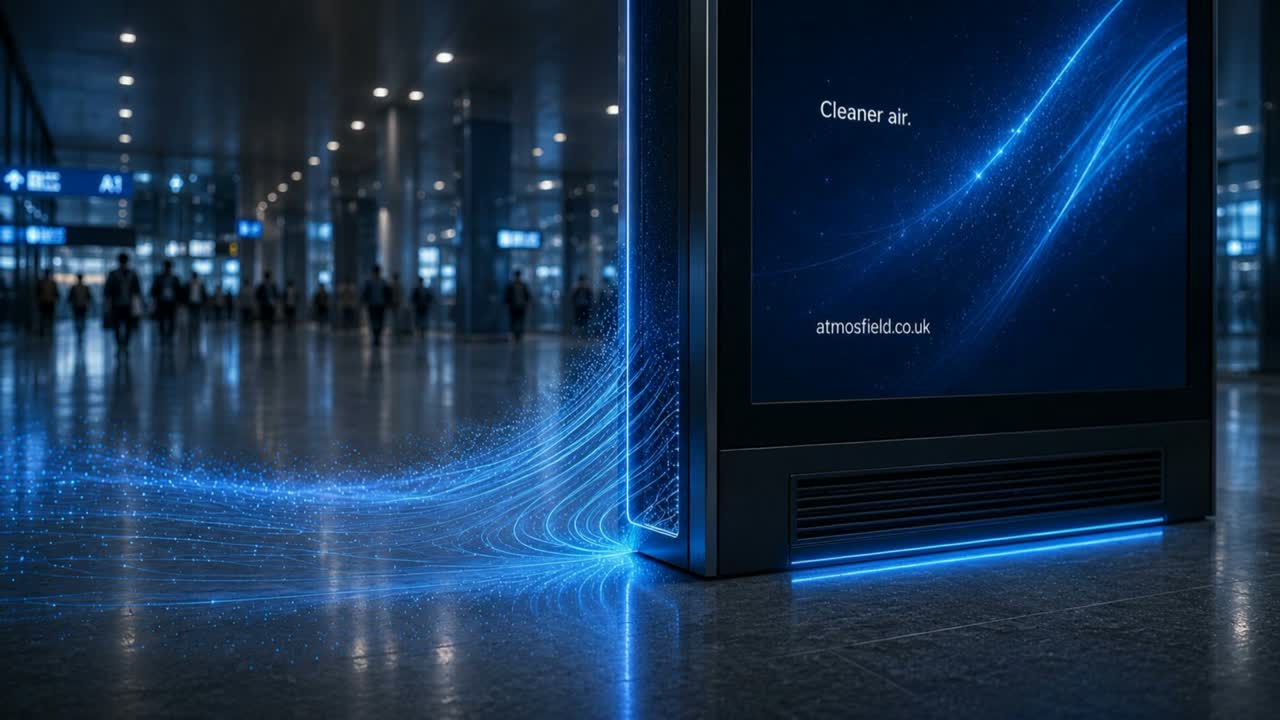
What if the screen was doing more than displaying an advert?
MEDIA INFRASTRUCTURE → CLEAN AIR INFRASTRUCTURE
- Airports
- Stations
- Shopping centres
- Workplaces
- Hospitality
- Public buildings
- High-footfall environments
Digital advertising and information screens already occupy some of the most valuable positions inside busy buildings.
PASSAIR explores how the physical architecture associated with those screens can incorporate particulate interaction and environmental functionality.
The opportunity is not the screen electronics. It is the architectural volume, surfaces, cavities and airflow surrounding the installed media infrastructure.
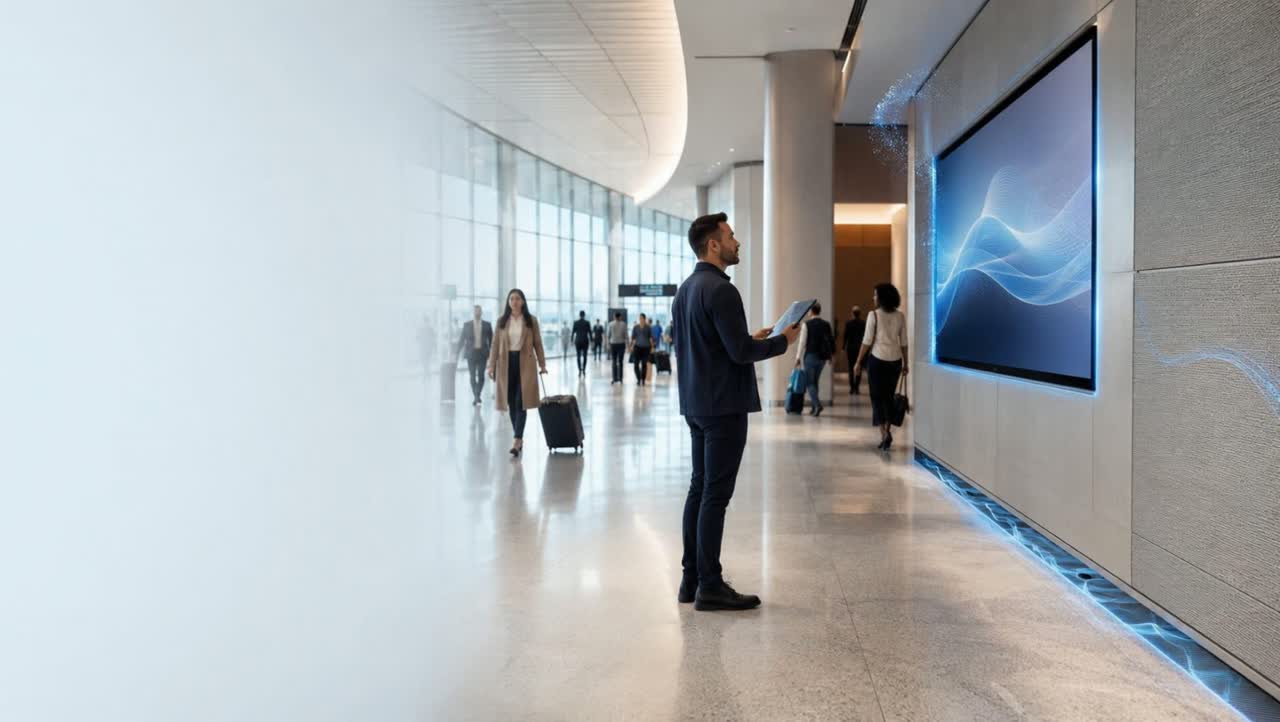
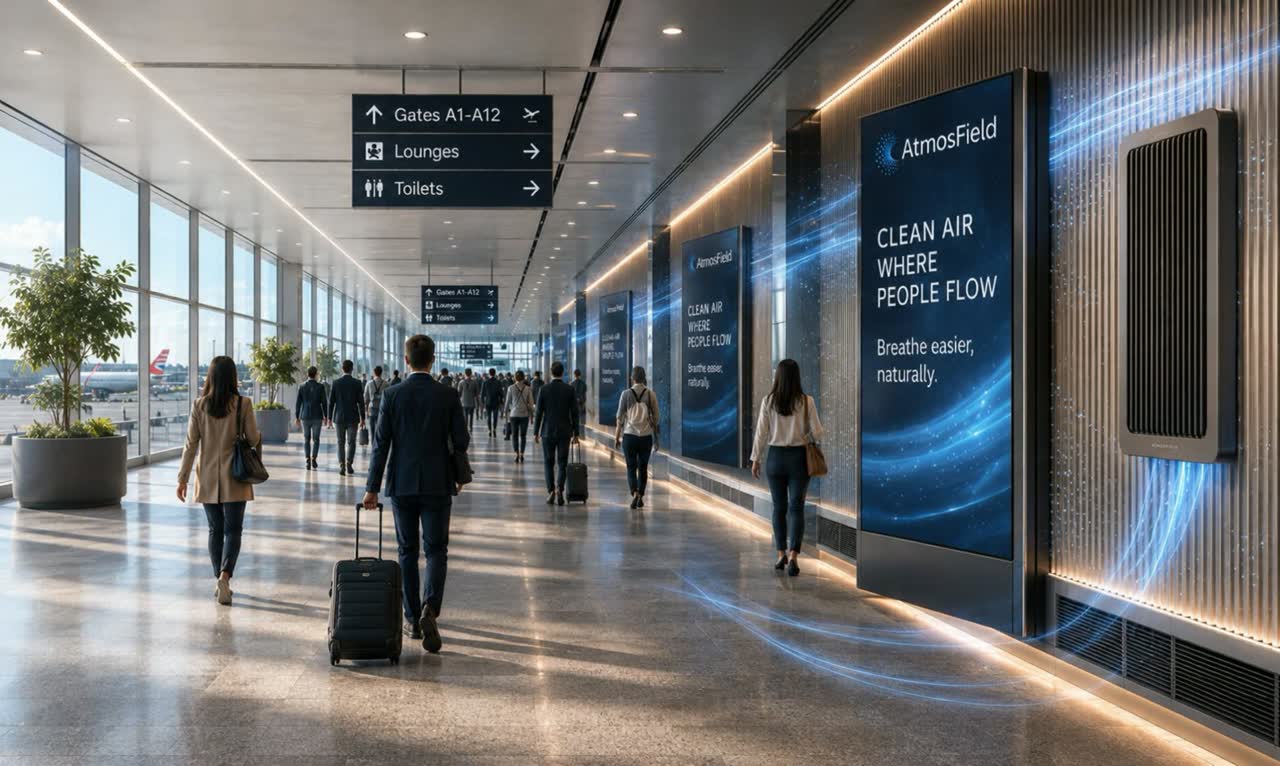
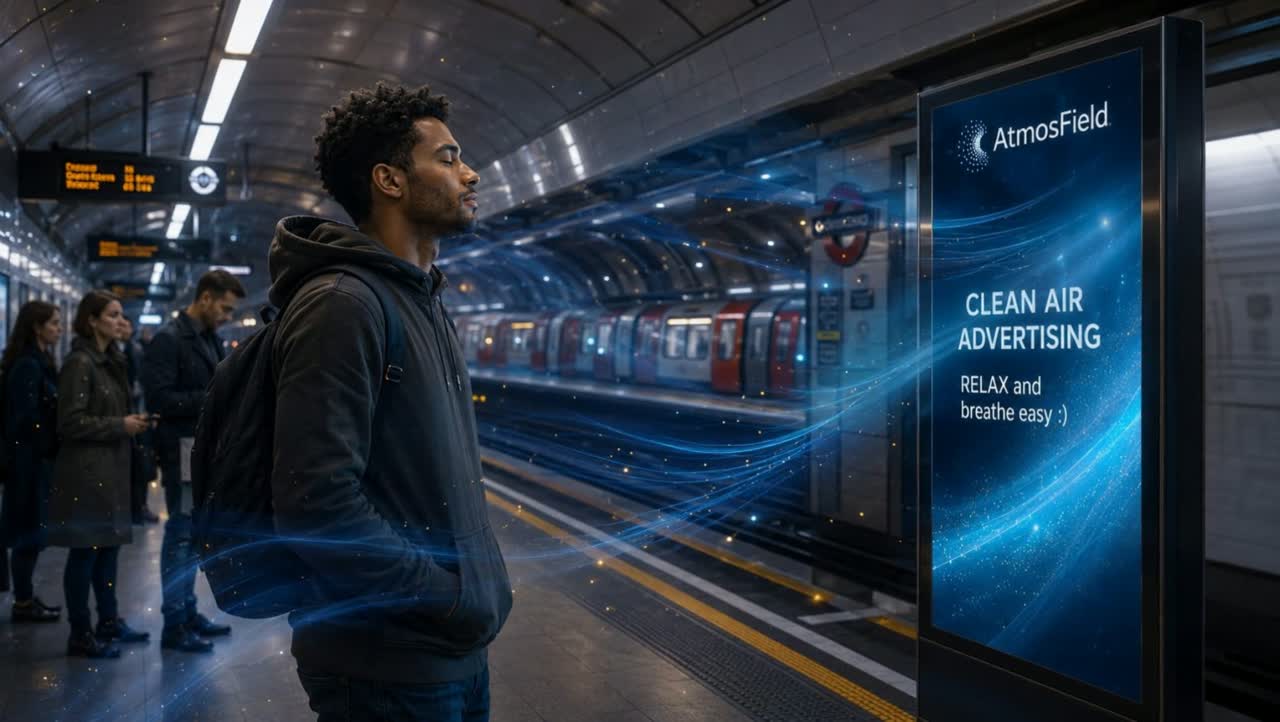
DEPLOYMENT SCALE / HIGH-FOOTFALL TRANSPORT ENVIRONMENTS
Architecture changes airflow.
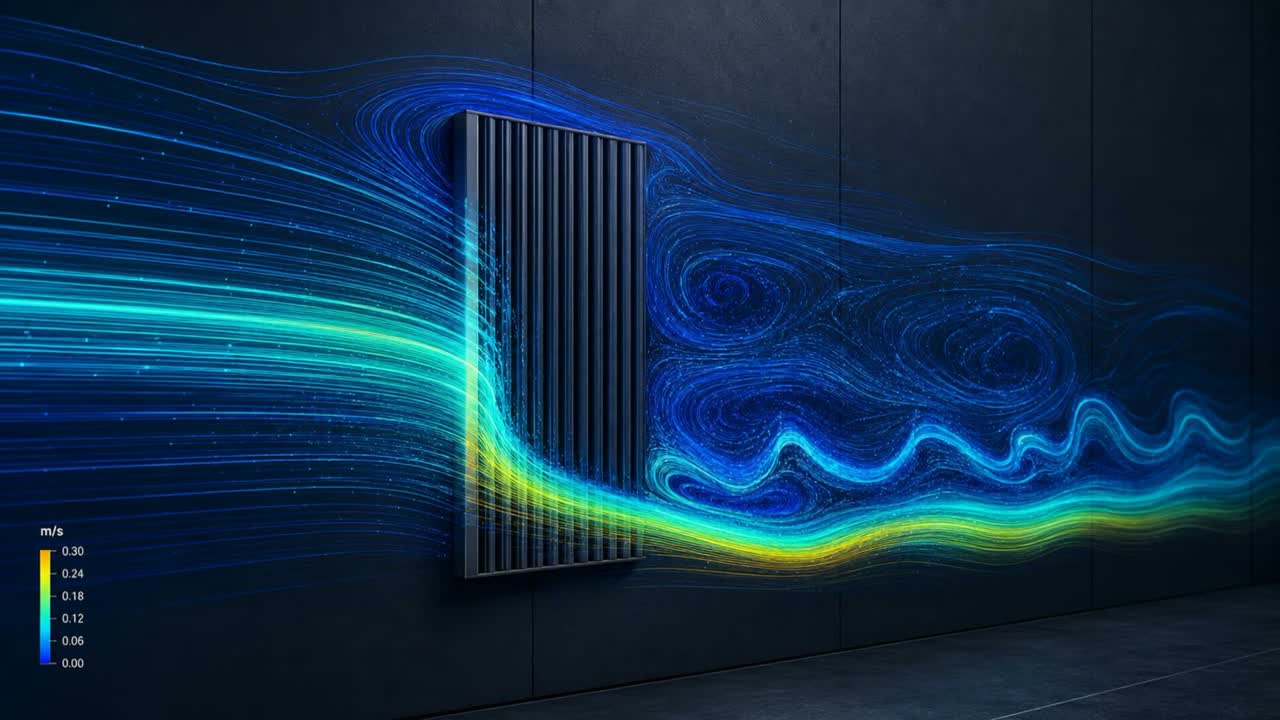
Every object introduced into an indoor environment changes the movement of air around it.
Screens, wall systems, panels and cavities create local airflow pathways, boundary regions and surface interactions.
PASSAIR designs around those interactions.
Wall-Integrated Surfaces for Indoor Particulate Control
A Simulation Study of Placement, Geometry and Electrostatic Interaction
Our CFD-supported work investigates how wall-integrated surfaces, media infrastructure and architectural geometry can influence indoor particulate behaviour.
Development routes supported
- Media and advertising screen infrastructure
- Wall-integrated panels
- Acoustic surfaces
- Passive air interaction
- Architectural particulate stabilisation
This is development-stage simulation work, not final commercial product validation.
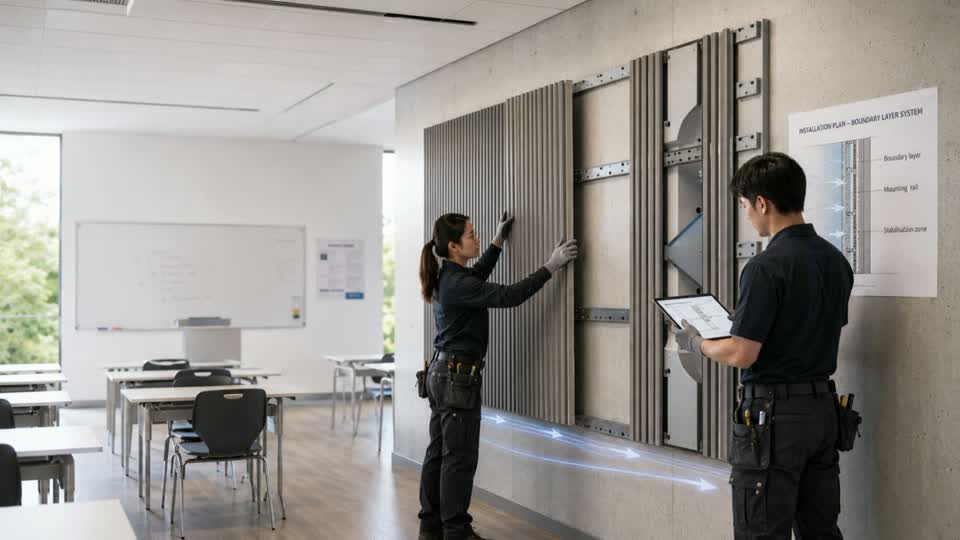
What if the wall itself could do more?
Wall panels already provide structure, finish, acoustic treatment, protection and design.
PASSAIR explores how their geometry, surface area and relationship with room airflow could also create useful environmental function.
This is not about attaching an air purifier to a wall. It is about designing the wall system itself around environmental behaviour.
The surface becomes part of the system.
What if acoustic surfaces could also interact with particulate?
Acoustic treatments deliberately introduce large areas of material and surface geometry into occupied environments.
That creates an obvious question: can some of that surface area perform a second environmental function?
Not every acoustic panel will manage air. The concept is integrated acoustic/environmental systems where appropriate.
Sound management and air management do not have to occupy separate infrastructure.
Integrate from day one.Or use what is already there.
Environmental function can be designed in from the beginning of a project.
- Screens
- Panels
- Acoustic systems
- Wall features
- Architectural surfaces
Infrastructure already installed may provide integration opportunities.
- Retrofit integration
- Replacement panels
- Screen surrounds
- Cavities
- Architectural additions
- Upgraded surface systems
A screen is an object.
Thousands of screens are infrastructure.
Add environmental function and the opportunity changes completely.
Acoustic panels and wall systems exist across entire buildings. Integration converts individual objects into a potentially distributed environmental layer.
Buildings are already full of things.
Make those things work harder.
PASSAIR is not based on the assumption that better indoor air always requires more standalone equipment.
Sometimes the opportunity is to redesign the things already around us.
From idea to engineered integration.
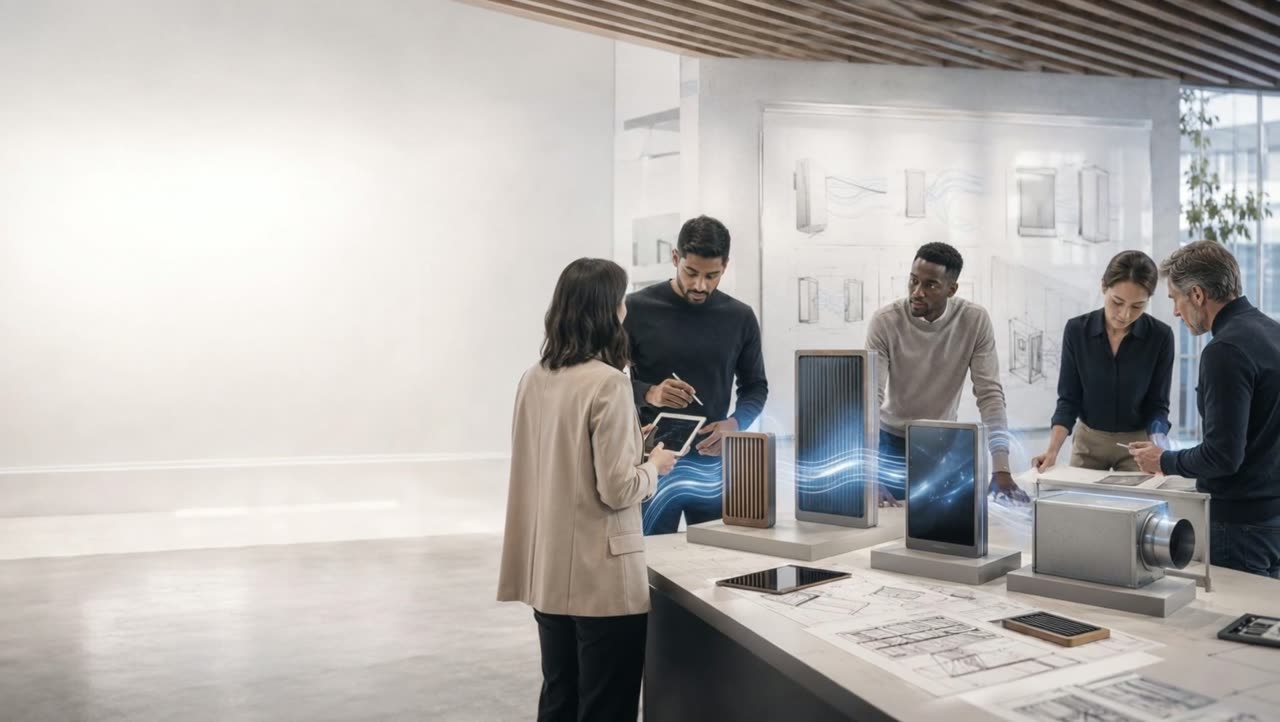
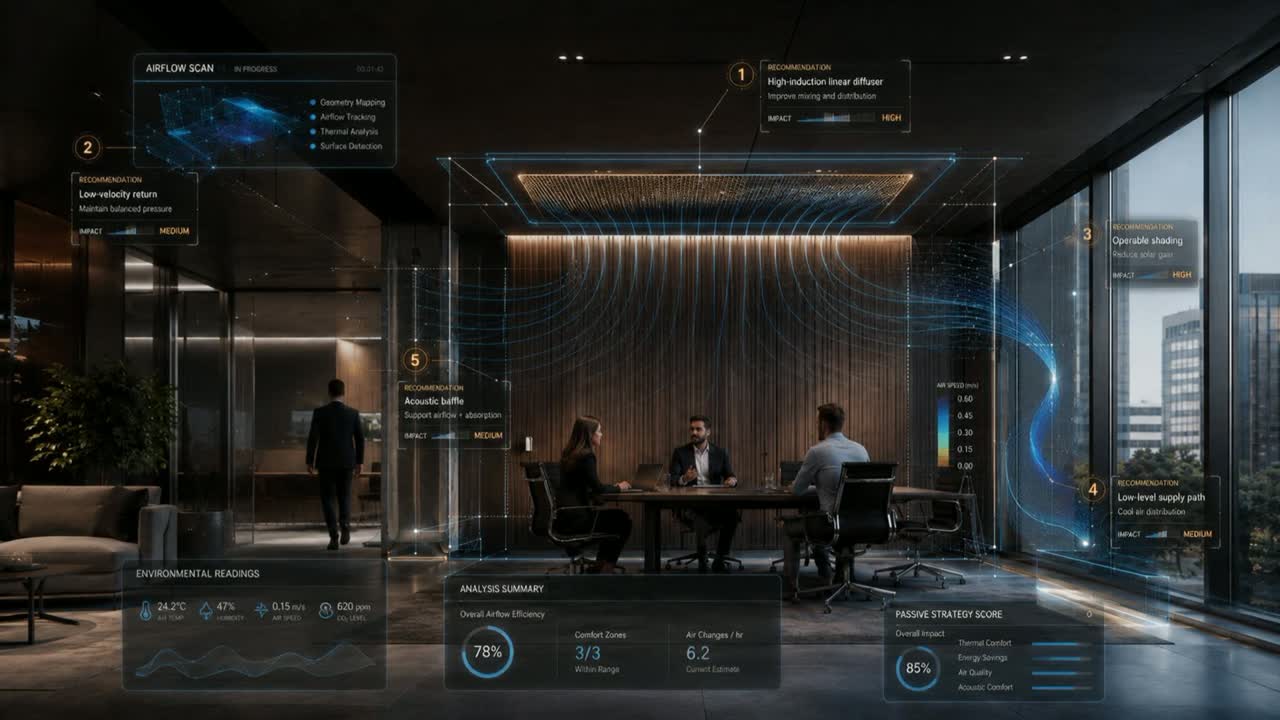
- Airflow modelling
- Particle modelling
- Materials
- Geometry
- Architectural design
- Specialist scientific input
- Industry development
Observe
Model
Design
Test
Refine
Integrate
Verify
Developing with industry and science.
PASSAIR is working with industry specialists and scientists to develop, test and refine the next generation of indoor environmental technology.
The opportunity sits across architecture, materials, airflow, particle science and building integration.
Don’t add another object.
Give the objects already there another purpose.
PASSAIR Integration explores how existing and newly specified building elements can become part of the clean air infrastructure.