PASSAIR HVAC — passive particulate capture inside ductwork
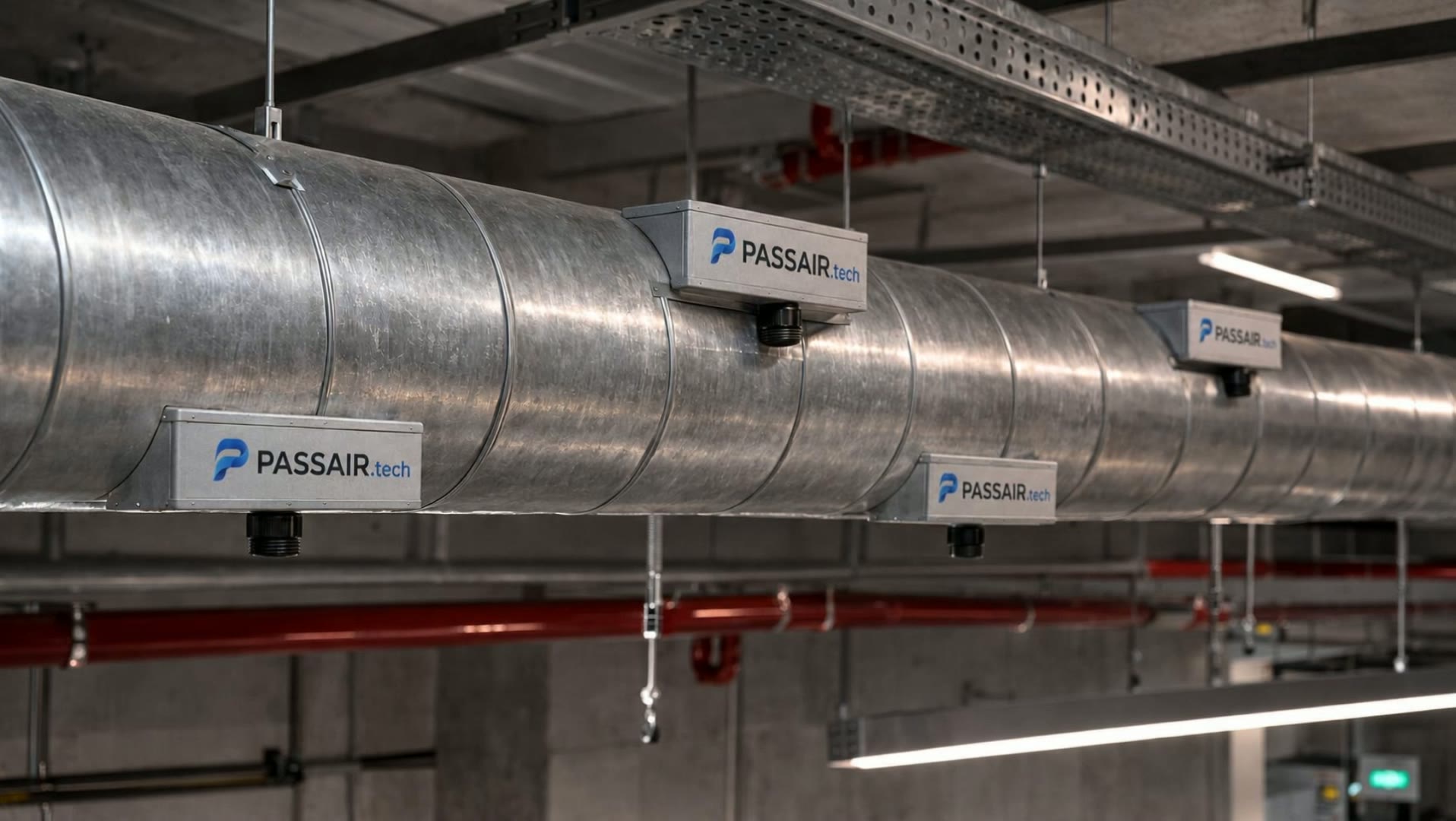
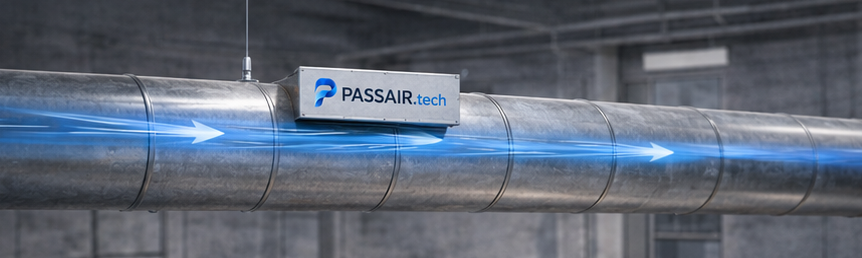
The duct is already moving the air.
PASSAIR asks whether we can use that existing airflow to progressively remove particles without turning the duct into another high-resistance filter.
Conventional filtration is essential in many HVAC systems, but filtration normally requires air to be driven through media. That creates resistance, influences fan energy and requires periodic filter replacement.
PASSAIR is exploring another layer: strategically positioned passive capture surfaces and structures within the airflow path that encourage particulate deposition while preserving the primary movement of air.
The smaller the particle, the stronger the effect.
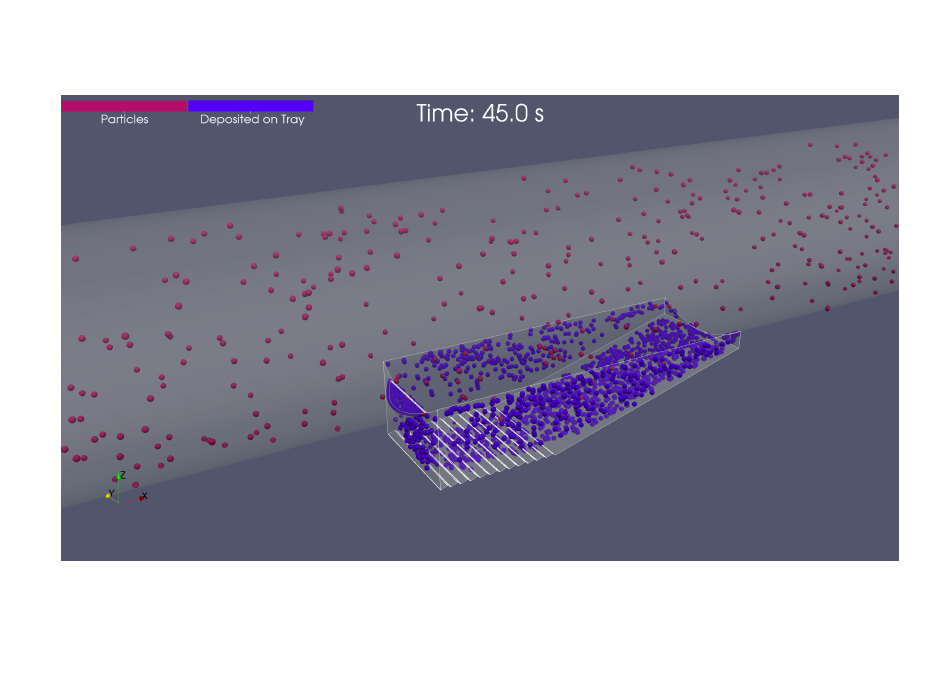
PM1 retention relative to PM10 in the tested CFD configuration
5.8×
In our initial physics-based CFD study, the tested PASSAIR geometry retained approximately 5.8× more PM1 than PM10.
That is the opposite direction to the challenge faced by conventional filtration.
Increasing relative capture
Designed around the particles that stay airborne longest.
Fine and ultrafine particles remain suspended in air more readily than larger particles and can penetrate deeper into the respiratory system.
For conventional filtration, smaller particles can be among the most challenging fractions to capture efficiently without increasing filter performance requirements and system resistance.
Our early modelling produced a very different behaviour: capture increased as particle size decreased.
This does not yet represent a final product efficiency claim. It is an early physics result from a specific CFD geometry and operating condition, and physical testing and optimisation are still required. But the direction of the result is important. If this behaviour is preserved and strengthened through development, PASSAIR could provide a complementary capture mechanism particularly suited to the fine and ultrafine particle fractions that matter most for airborne exposure.
Capture the particle. Keep the air moving.
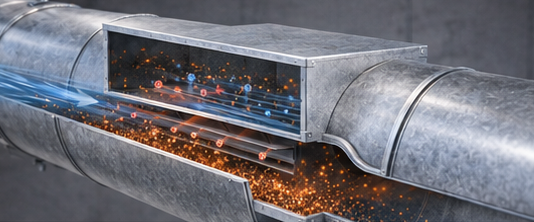
Air travels through the duct
The HVAC system provides the airflow. PASSAIR does not need to create another independent air stream.
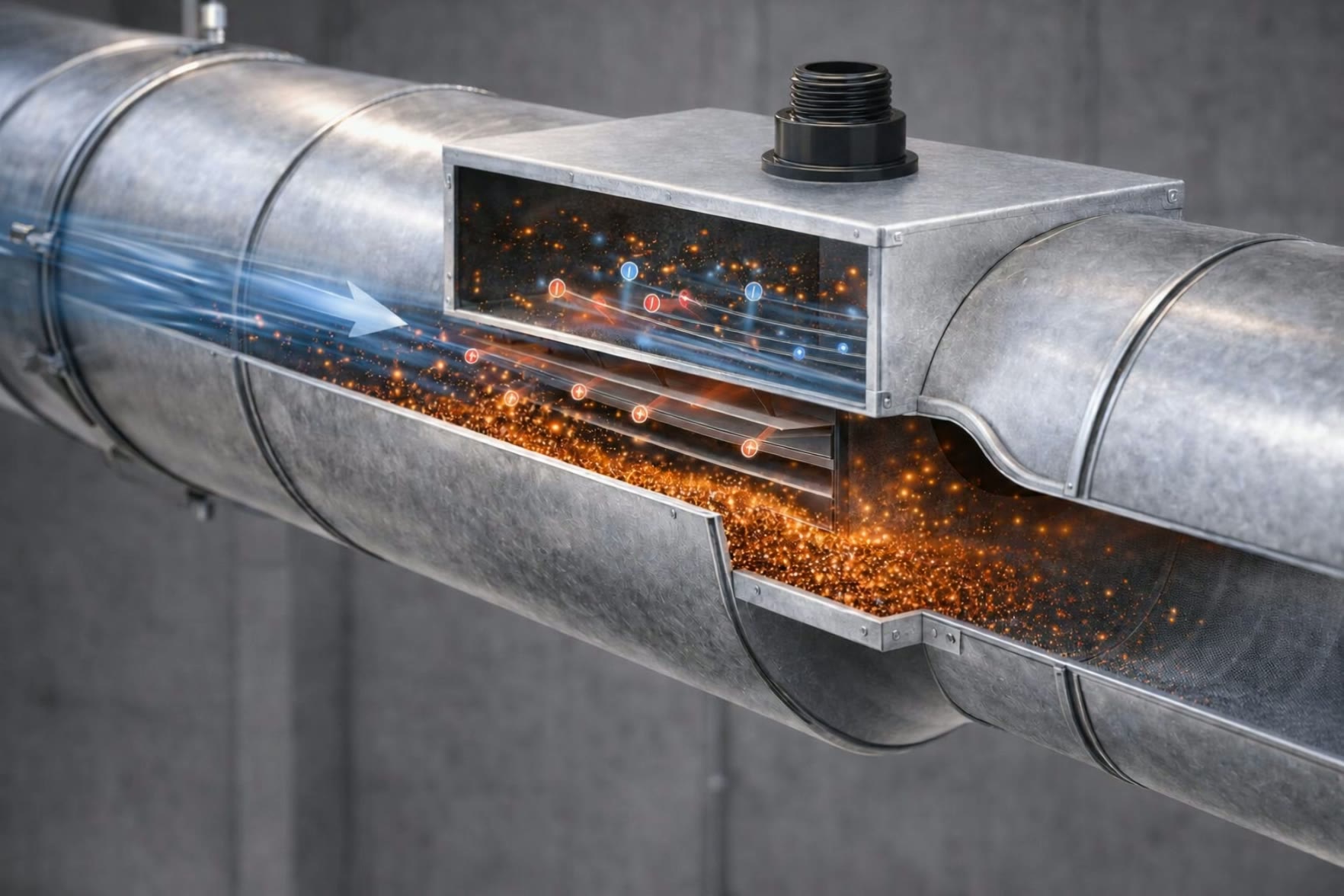
Particles interact with engineered surfaces
Geometry, surface properties and potentially electrostatic mechanisms increase the probability that suspended particles leave the moving air stream.
Captured material is maintained externally
The concept is being developed around accessible collection and maintenance rather than permanently inaccessible contamination inside ductwork.
Not every system needs another filter.
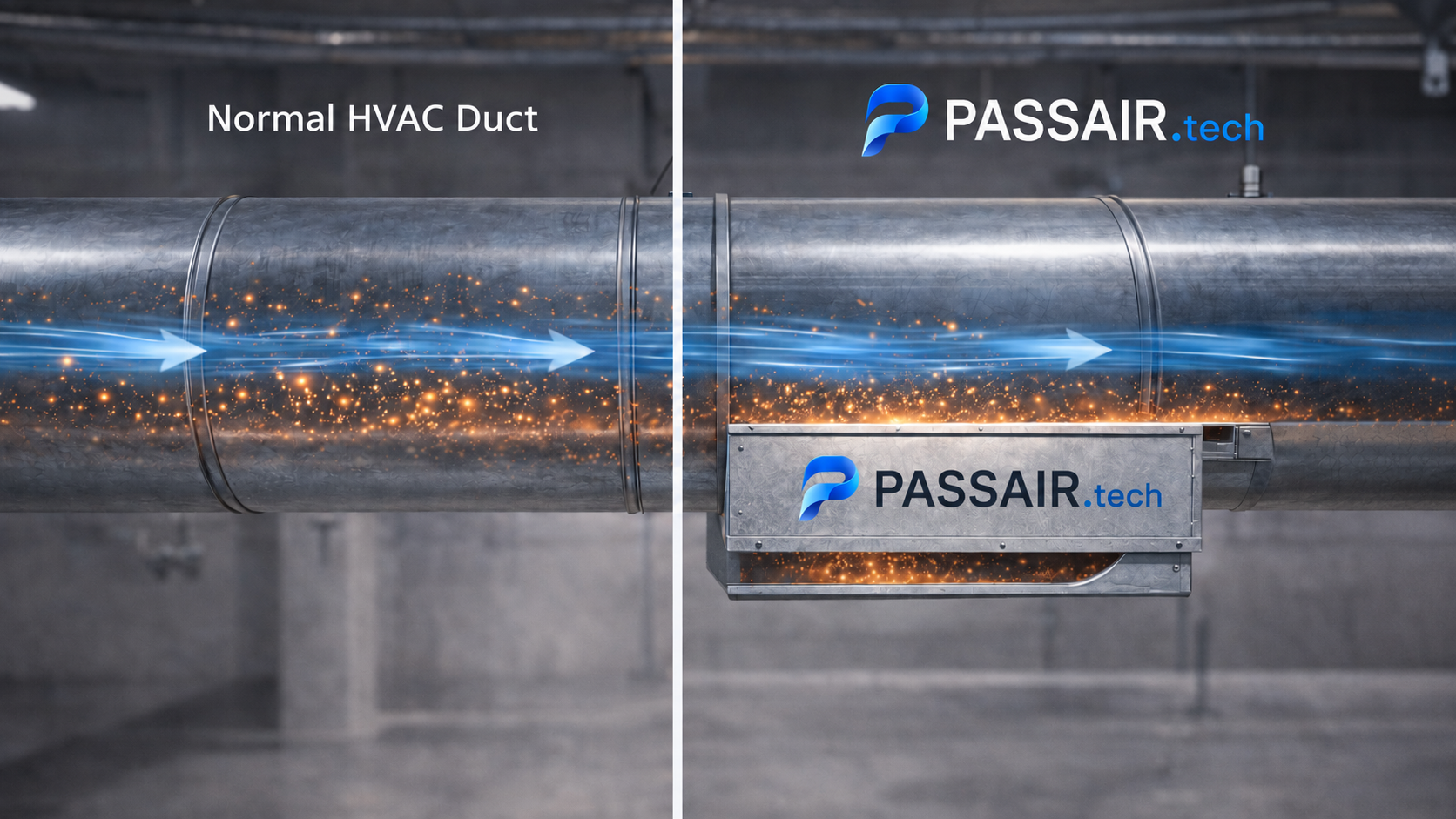
PASSAIR is not based on the assumption that conventional filtration should disappear. Instead, it creates new options for systems where additional particulate reduction is desirable but conventional filtration is difficult, inefficient or already heavily loaded.
A new kind of pre-capture layer
PASSAIR could remove a proportion of particulate before it reaches conventional filtration.
- Reduced particulate loading downstream
- Potentially longer filter service intervals
- Additional fine-particle capture
- Distributed capture across long duct runs
- Less dependence on a single treatment point
Where conventional filtration is difficult
PASSAIR may be especially interesting where systems cannot easily accommodate additional filter resistance, deep filter banks or major HVAC modifications.
- Retrofit ductwork
- Constrained HVAC systems
- Ventilation extract systems
- Industrial ventilation
- Large distributed duct networks
- Systems where energy or acoustic penalties are critical
Suitability has not yet been validated for every application.
Why capture everything in one place?
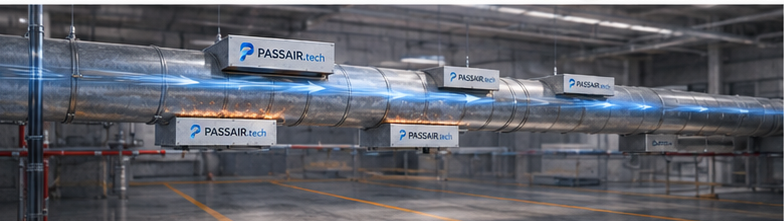
Traditional HVAC filtration is normally concentrated at specific treatment points.
PASSAIR introduces the possibility of distributed particulate capture, with multiple low-resistance capture locations positioned strategically through a ventilation network.
One duct. Multiple opportunities to remove particles.
Progressive capture
Particles encounter multiple capture opportunities.
Location-specific design
Modules could potentially be positioned according to airflow, contamination and maintenance requirements.
Retrofit potential
The concept is intended to complement existing HVAC infrastructure rather than require wholesale replacement.
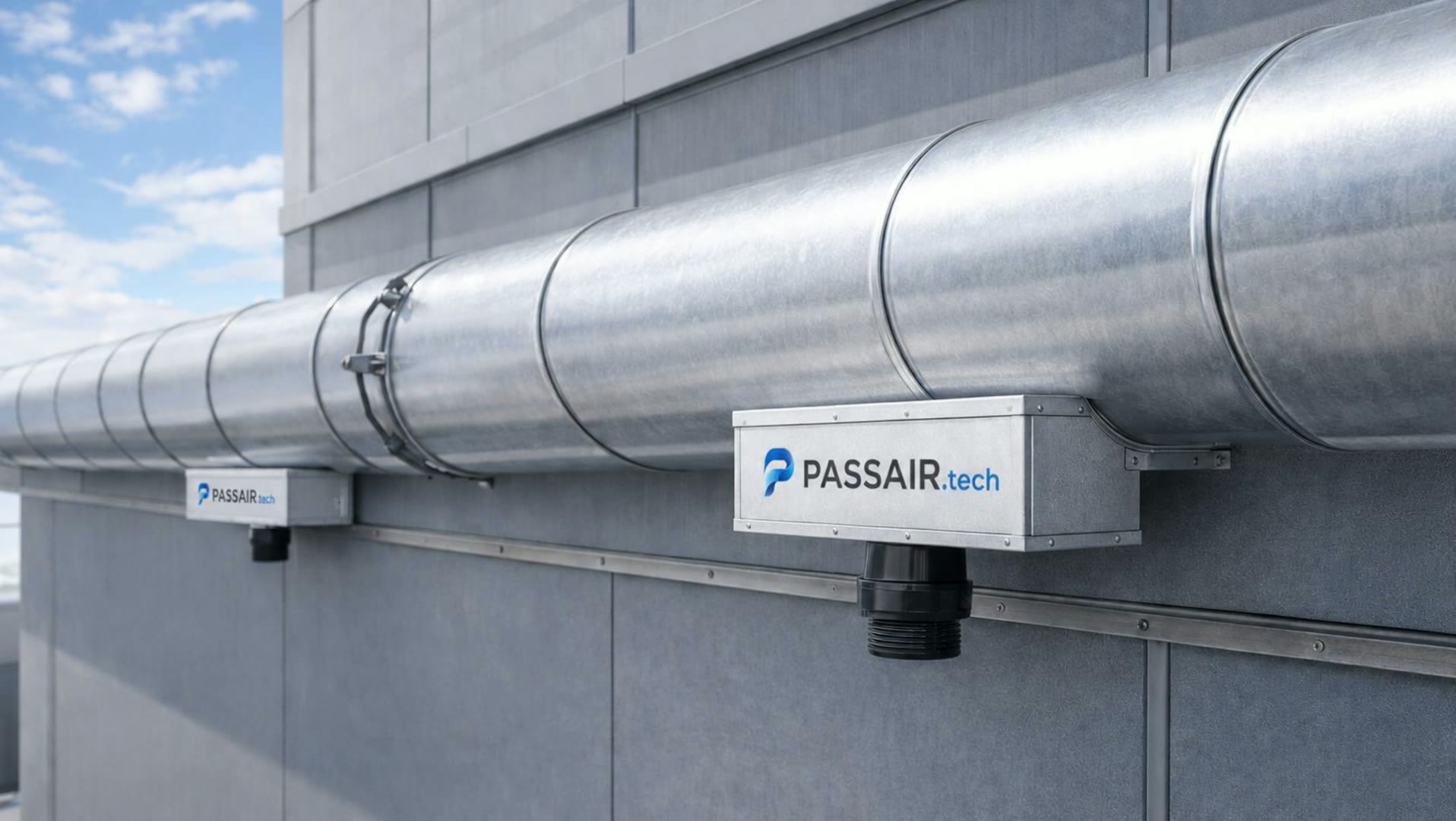
A different architecture for HVAC particle control.
PASSAIR HVAC forms part of our wider patent-pending Clean Air Infrastructure platform, exploring how surfaces, geometry and existing airflow can become active participants in environmental control.
Intellectual propertyFrom concept to physics. From physics to hardware.
- 01Complete
Concept developed
- 02Complete
Patent pending
- 03Complete
Physics-based CFD tested
- 04In progress
Geometry optimisation
- 05Next
Physical prototyping & validation
- 06Next
Manufacturing integration
PASSAIR HVAC is in active development. It is not presented as a certified commercial product.
We are looking for the right partners to take this into the world's HVAC systems.
We are actively exploring partnerships with organisations that can help develop, manufacture, validate and commercialise PASSAIR HVAC.
We are not looking simply for suppliers. We are looking for partners who recognise the size of the opportunity.
Air is already moving through billions of metres of ductwork.
What else could we make that airflow do?